
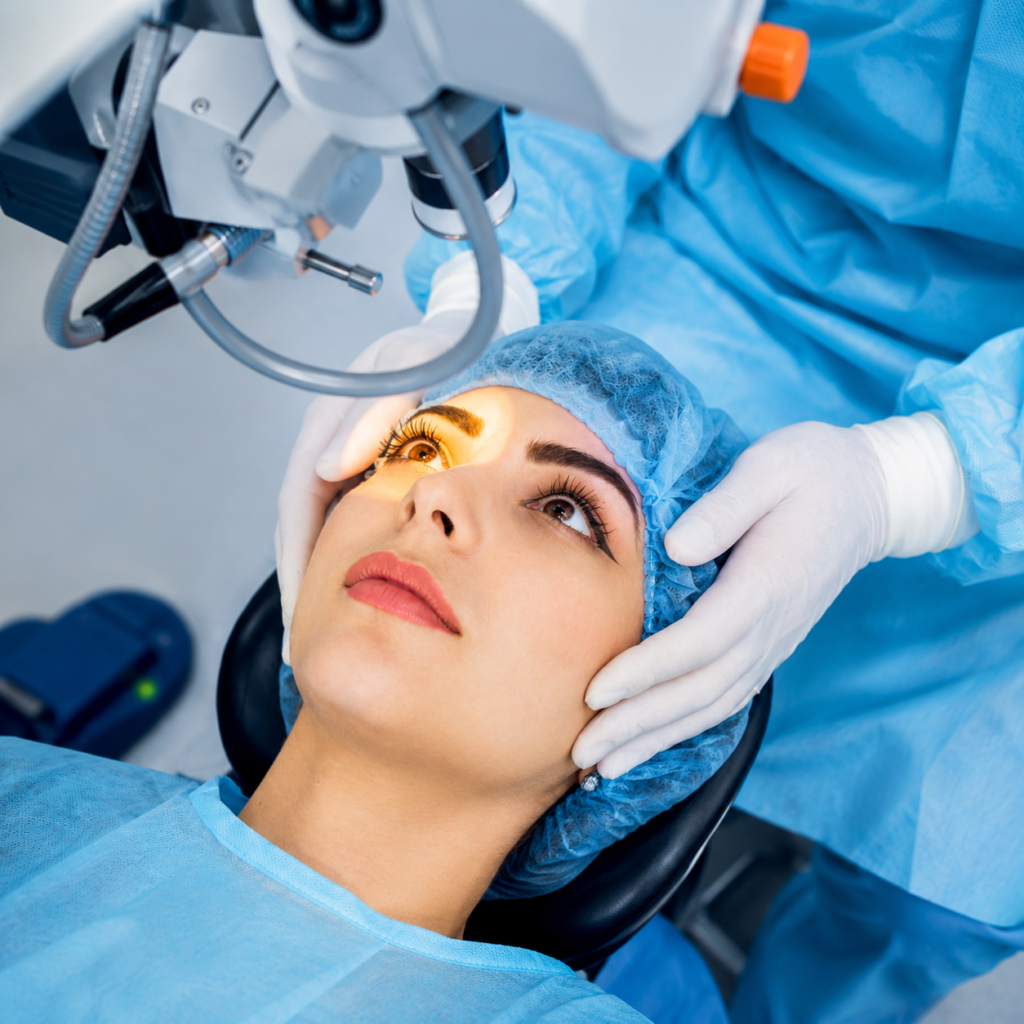
Photorefractive Keratectomy (PRK) is a safe and effective laser vision correction procedure that helps reduce or eliminate the need for glasses and contact lenses. PRK corrects common refractive errors such as myopia (nearsightedness), hyperopia (farsightedness), and astigmatism by reshaping the cornea with an advanced excimer laser. Unlike LASIK, PRK does not involve creating a corneal flap, making it an excellent option for patients with thin corneas, dry eyes, or those involved in contact sports and physically demanding professions.

At our eye care center, we use advanced diagnostic technology and modern laser systems to provide personalized PRK treatment. Before surgery, every patient undergoes a comprehensive eye examination, including corneal mapping and vision assessment, to determine whether PRK is the most suitable option. During the procedure, the thin outer layer of the cornea (epithelium) is gently removed, and the laser reshapes the cornea to improve vision. The epithelium naturally regenerates within a few days.

Although recovery after PRK is slightly longer than LASIK, the long-term visual outcomes are excellent and comparable. Most patients achieve clear, stable vision with proper post-operative care. If you are looking for a reliable laser vision correction option and are not a candidate for LASIK, PRK surgery may be the ideal solution.

The Eye Center Specialist
OUR TEAM

THE EYE CENTER SPECIALIST

Dr. Sonal Patel

MS Gold Medalist, DNB, FICO

Dr. Shachi Desai

MS, DNB, FURS, FAICO, FICO

Dr. Deep Joshi

MS, FICO Cataract & Glaucoma Surgeon

What is PRK surgery?

PRK (Photorefractive Keratectomy) is a laser eye surgery that reshapes the cornea to correct refractive errors without creating a corneal flap.

PRK removes the outer layer of the cornea (epithelium) before laser treatment, while LASIK creates a corneal flap. PRK is often recommended for patients with thin corneas or dry eyes.

The procedure itself is painless due to anesthetic eye drops. Mild discomfort, tearing, and light sensitivity may occur for a few days during the healing process.

The surface of the cornea generally heals within 3–5 days, while vision continues to improve and stabilize over several weeks to a few months.