
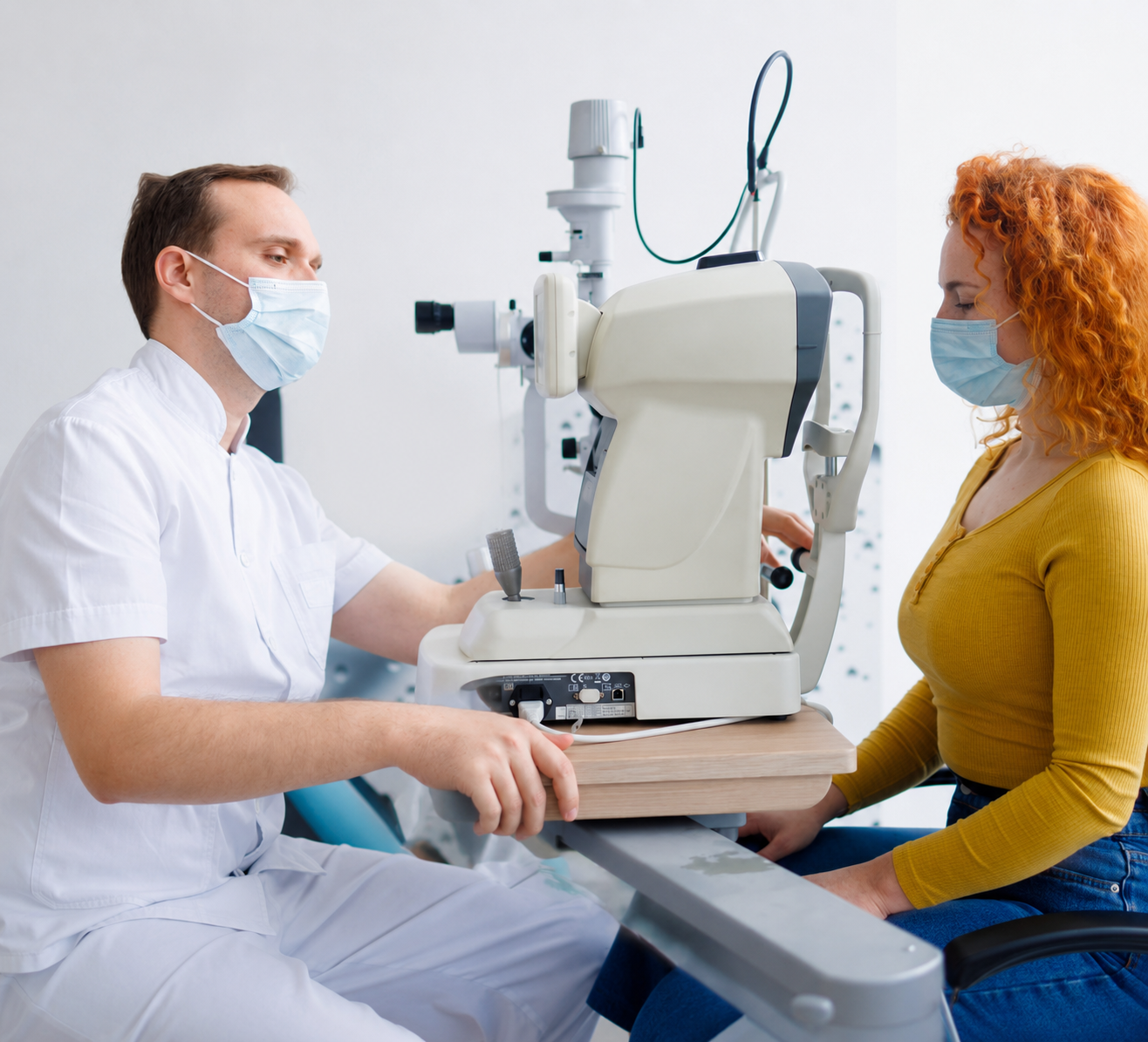
Glaucoma is a group of eye diseases that damage the optic nerve, often due to increased pressure inside the eye (intraocular pressure). It is one of the leading causes of irreversible blindness worldwide. In its early stages, glaucoma usually has no noticeable symptoms, which is why it is often called the “silent thief of sight.” Regular eye examinations are essential for early detection and timely treatment.

At our eye care center, we offer comprehensive glaucoma screening, diagnosis, and advanced treatment to help protect your vision. Our experienced ophthalmologists use modern diagnostic tools such as eye pressure measurement (tonometry), optic nerve evaluation, visual field testing, and Optical Coherence Tomography (OCT) to accurately detect glaucoma. Depending on the severity of the condition, treatment may include prescription eye drops, oral medications, laser therapy, or minimally invasive glaucoma surgery (MIGS) and conventional glaucoma surgery.

Although glaucoma cannot be cured, early diagnosis and proper treatment can effectively slow or prevent further vision loss. Patients with a family history of glaucoma, diabetes, high blood pressure, or those over the age of 40 should undergo regular eye checkups. If you experience blurred vision, eye pain, halos around lights, or gradual loss of peripheral vision, consult an eye specialist immediately. Protect your eyesight with timely glaucoma screening and expert care.

The Eye Center Specialist
OUR TEAM

THE EYE CENTER SPECIALIST

Dr. Sonal Patel

MS Gold Medalist, DNB, FICO

Dr. Shachi Desai

MS, DNB, FURS, FAICO, FICO

Dr. Deep Joshi

MS, FICO Cataract & Glaucoma Surgeon
What is glaucoma?

Glaucoma is an eye disease that damages the optic nerve, usually due to increased pressure inside the eye, leading to gradual vision loss if left untreated.

People over 40 years of age, those with a family history of glaucoma, diabetes, high blood pressure, high eye pressure, or previous eye injuries are at greater risk.

No. Glaucoma cannot be cured, but early diagnosis and treatment can slow or prevent further vision loss.

Yes. A family history of glaucoma significantly increases the risk of developing the condition.